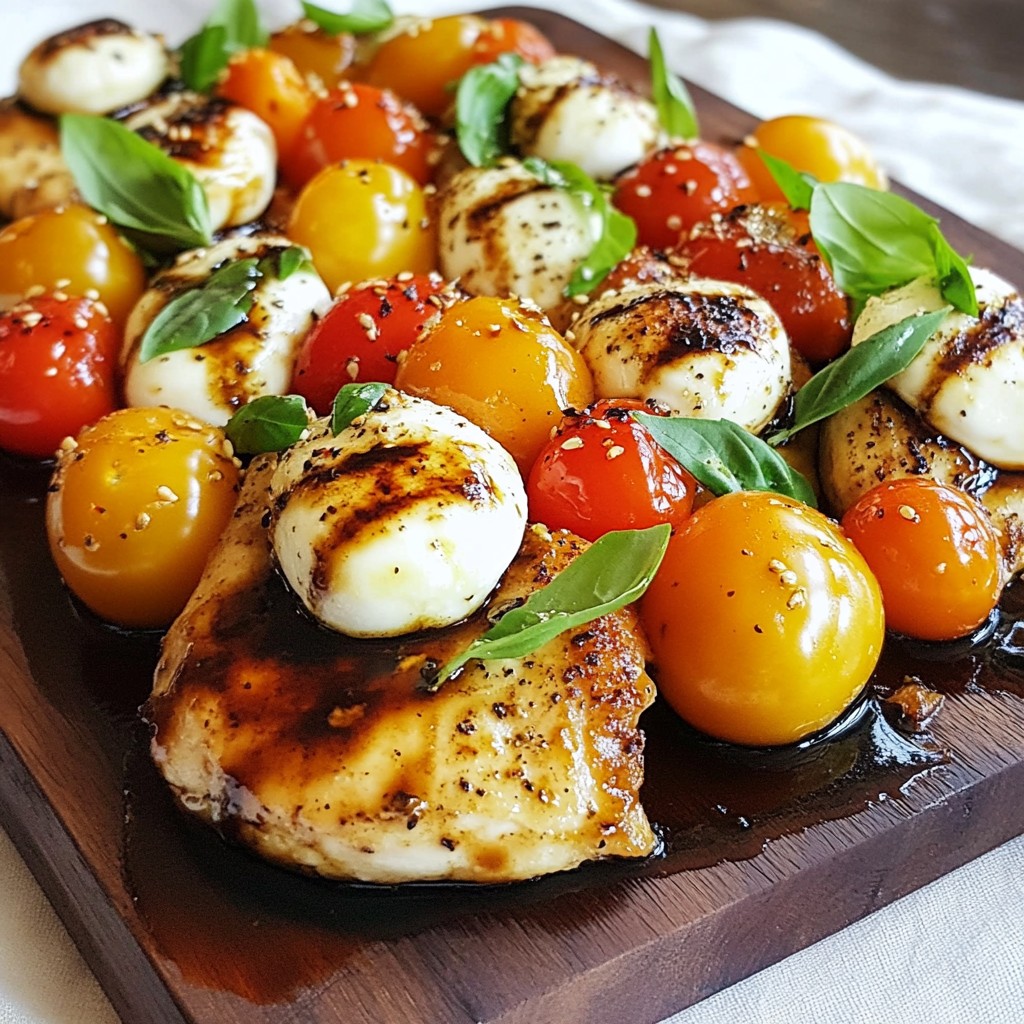
Looking for a dinner that wows? Let me introduce you to Balsamic Glazed Caprese Chicken! This easy meal bursts with fresh flavors, making it perfect for any night. With juicy chicken, gooey mozzarella, and vibrant tomatoes, this dish is a feast for your taste buds. Don’t worry—I’ll guide you through every step so you can impress your family or guests. Dive in to create a tasty dinner everyone will love!
Why I Love This Recipe
- Flavorful Glaze: The balsamic glaze adds a perfect balance of sweetness and acidity, enhancing the chicken's natural flavors.
- Fresh Ingredients: Using cherry tomatoes, mozzarella, and basil makes this dish vibrant and fresh, perfect for any season.
- Easy to Prepare: With simple steps and quick cooking time, this recipe is great for busy weeknights or entertaining guests.
- One-Pan Wonder: Cooking everything in one skillet minimizes cleanup, making it as convenient as it is delicious.
Ingredients
Main Ingredients for Balsamic Glazed Caprese Chicken
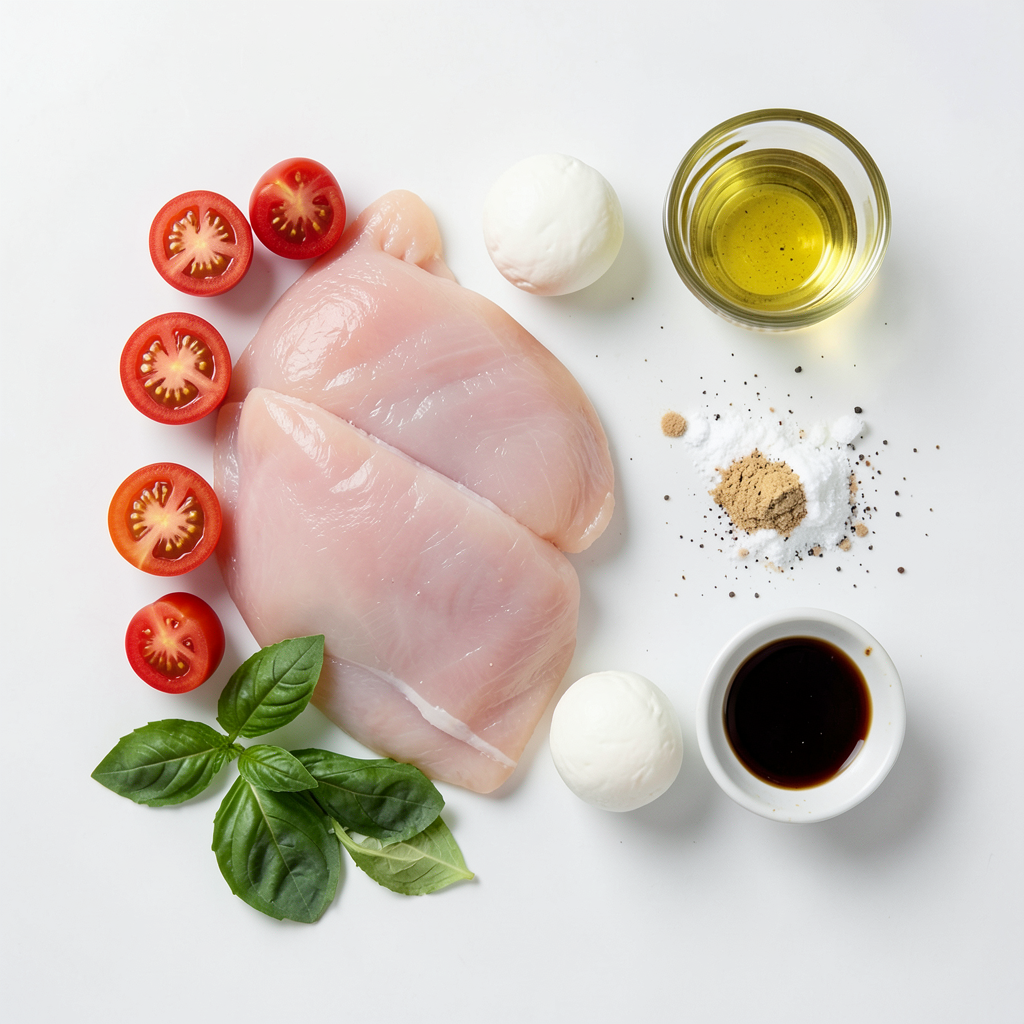
For this dish, you will need these main ingredients:
- 4 boneless, skinless chicken breasts
- 1 cup cherry tomatoes, halved
- 1 cup fresh mozzarella balls, halved
- 1 cup fresh basil leaves, roughly torn
These ingredients create a tasty mix of flavors and textures. The chicken provides protein, while the tomatoes and mozzarella add freshness.
Recommended Fresh Ingredients
I always recommend using fresh ingredients for the best taste. Here are some tips:
- Basil: Use fresh basil leaves. They give a sweet aroma.
- Tomatoes: Choose ripe cherry tomatoes for a burst of flavor. They should be juicy and sweet.
- Mozzarella: Opt for fresh mozzarella balls. They melt nicely and add creaminess.
These fresh items bring your dish to life and make it more enjoyable.
Pantry Staples Required
You will also need a few pantry staples to enhance the flavor of the chicken:
- 1/2 cup balsamic vinegar
- 2 tablespoons honey
- 2 tablespoons olive oil
- 1 teaspoon garlic powder
- Salt and pepper to taste
These staples combine to create a rich balsamic glaze. The honey adds a touch of sweetness, balancing the tang of the vinegar.
Step-by-Step Instructions
Preparation Steps
Start by preheating your oven to 400°F (200°C). Grab a small saucepan and mix 1/2 cup of balsamic vinegar with 2 tablespoons of honey. Heat it over medium-low heat. Stir it gently until it simmers and thickens a bit. This should take about 5 to 7 minutes. Afterward, take it off the heat and set it aside.
Next, take 4 boneless, skinless chicken breasts. Season them with 1 teaspoon of garlic powder, salt, and pepper. Make sure to coat them well for flavor.
Cooking Process
Now, heat 2 tablespoons of olive oil in a large oven-safe skillet over medium heat. Once the oil is hot, add the chicken breasts to the skillet. Sear the chicken for about 4 to 5 minutes on each side. You want them golden brown.
After browning, pour the balsamic glaze over the chicken. Make sure each piece is well-coated. Then, scatter 1 cup of halved cherry tomatoes and 1 cup of halved fresh mozzarella balls around the chicken in the skillet.
Final Assembly and Serving Instructions
Transfer the skillet to your preheated oven. Bake for 20 to 25 minutes. Check that the chicken reaches an internal temperature of 165°F (74°C). This ensures it is cooked through.
Once done, take the skillet out of the oven. Top the dish with 1 cup of roughly torn fresh basil leaves. Drizzle any leftover balsamic glaze from the skillet over the chicken.
To serve, use a rustic wooden board or a simple white plate. This creates a nice contrast. You can also add a light salad or some pasta tossed in olive oil and lemon for a complete meal. Enjoy!
Tips & Tricks
How to Ensure Juicy Chicken
To make sure your chicken stays juicy, use boneless, skinless breasts. These cook faster and stay moist. Sear the chicken in a hot skillet first. This gives it a nice brown crust. Cook each side for 4-5 minutes. After searing, pour the balsamic glaze over the chicken. This adds flavor and keeps it juicy while baking. Check the internal temperature with a meat thermometer. It should reach 165°F (74°C) for safe eating.
Best Practices for Balsamic Glaze
For a rich balsamic glaze, combine balsamic vinegar and honey in a small saucepan. Heat it over medium-low heat. Let it simmer for about 5-7 minutes. You want it to thicken slightly. This brings out the sweet and tangy flavors. Make sure to coat the chicken well with the glaze. This will enhance the taste and make it look glossy.
Presentation Tips for a Stunning Dish
A beautiful plate makes your meal more inviting. Serve the chicken on a rustic wooden board or a bright white plate. This contrast highlights the colors. Add halved cherry tomatoes and mozzarella balls around the chicken for extra pop. Sprinkle fresh basil on top. For a complete meal, pair it with a light salad or pasta drizzled in olive oil and lemon. This will make the dish even more appealing.
Pro Tips
- Use Fresh Ingredients: Always opt for fresh basil and high-quality mozzarella for the best flavor. Fresh ingredients make a significant difference in taste.
- Let Chicken Rest: After baking, allow the chicken to rest for a few minutes before slicing. This helps the juices redistribute, ensuring moist and tender meat.
- Customize Your Glaze: Feel free to add herbs like thyme or rosemary to the balsamic glaze for an extra layer of flavor that complements the chicken beautifully.
- Experiment with Sides: Pair this dish with roasted vegetables or a quinoa salad for a healthy twist. The balsamic glaze pairs well with a variety of sides, enhancing your meal.
Variations
Chicken Alternatives
You can change the chicken breasts to thighs if you like. Chicken thighs are juicier and have more flavor. If you prefer a plant-based option, try tofu. Press the tofu to remove extra water and cut it into thick slices. This will help it soak up the glaze well.
Ingredient Swaps
If you want to mix things up, swap the mozzarella for burrata. Burrata adds a creamy touch that melts in your mouth. You can also use feta cheese for a tangy twist. Crumbled feta gives a nice saltiness that pairs well with the balsamic glaze.
Seasonal Vegetable Additions
Feel free to add seasonal veggies for extra flavor. In summer, toss in zucchini or bell peppers. In fall, try butternut squash or Brussels sprouts. These veggies add color and nutrition to your meal. Just make sure to cut them into even pieces for even cooking.
Storage Info
How to Store Leftovers
To store leftovers, place the chicken in an airtight container. Ensure the chicken and sauce cool down first. Store it in the fridge for up to four days. If you want to keep it longer, consider freezing.
Reheating Instructions
Reheat the chicken in the oven or microwave. For the oven, set it to 350°F (175°C). Heat for about 15-20 minutes. In the microwave, heat on medium for 2-3 minutes. Check for warmth throughout before serving.
Freezing Balsamic Glazed Chicken
To freeze the balsamic glazed chicken, wrap it tightly in plastic wrap. Then, place it in a freezer bag or container. It can last up to three months in the freezer. Thaw it overnight in the fridge before reheating.
FAQs
What can I serve with Balsamic Glazed Caprese Chicken?
You can serve this dish with many tasty sides. Here are some great options:
- A light salad of mixed greens can add crunch and freshness.
- Pasta tossed in olive oil and lemon makes a filling side.
- Garlic bread pairs nicely with the flavors of the chicken.
- Roasted vegetables add color and nutrients to the plate.
Can I make this recipe in advance?
Yes, you can prepare parts of this dish ahead of time. You can marinate the chicken with the balsamic glaze overnight. Just cover the chicken in the glaze and store it in the fridge. You can also chop the tomatoes and mozzarella early. This makes cooking quick and easy on the day you want to serve it.
How do you know when the chicken is done cooking?
To check if the chicken is done, use a meat thermometer. The chicken should reach an internal temperature of 165°F (74°C). This ensures it is safe to eat. If you don't have a thermometer, cut into the thickest part of the chicken. The meat should be white, not pink. This way, you can be sure your chicken is juicy and fully cooked.
In this blog post, I covered the key components of Balsamic Glazed Caprese Chicken. We explored the main ingredients and their role in creating flavor. I shared step-by-step instructions for prep, cooking, and serving. With tips on keeping chicken juicy and perfecting the glaze, you now have the tools for success. We also discussed variations and ways to store leftovers.
Take these insights and make this dish your own. Enjoy the delicious flavors of this recipe and impress those you serve.