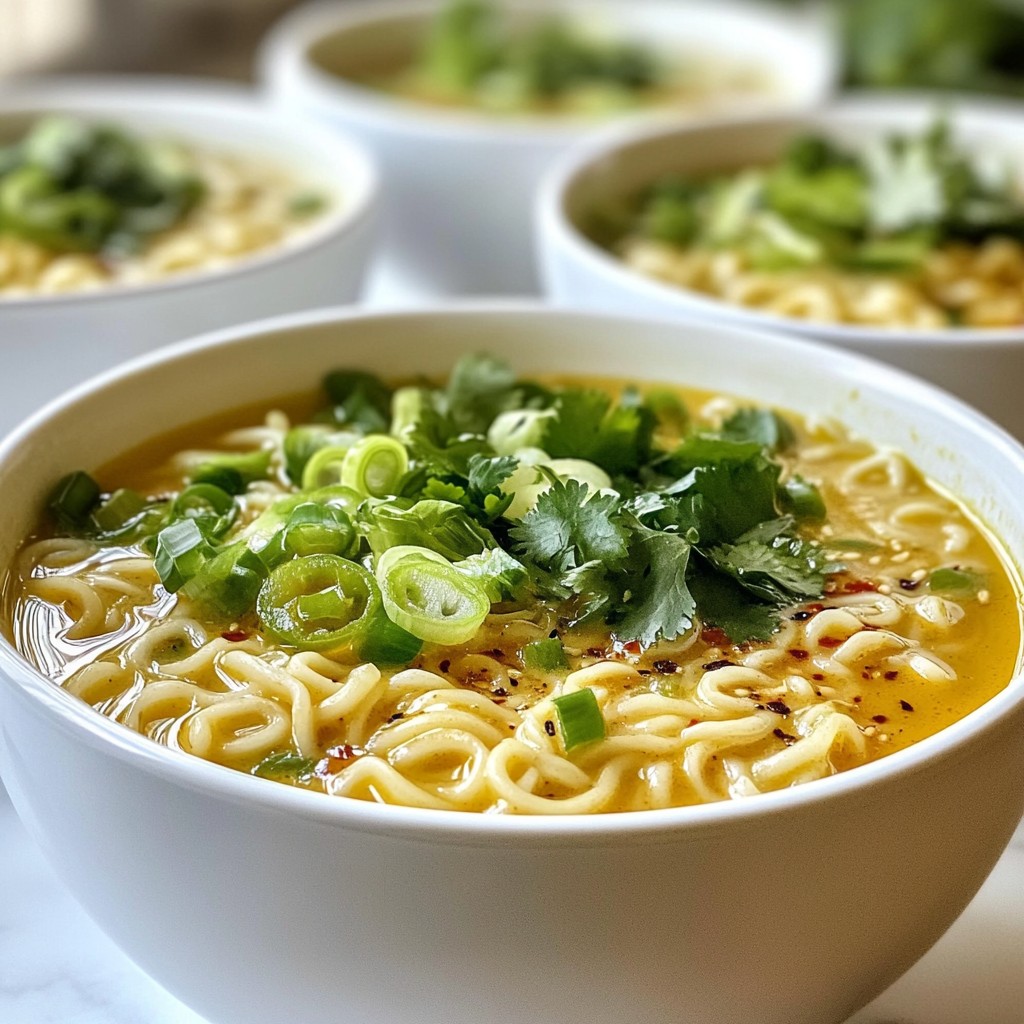
Coconut Curry Ramen is a warm hug in a bowl, bursting with flavor. I’ll show you how to combine fresh ingredients and spices to create a dish that comforts and delights. With simple steps, you’ll make a tasty meal that impresses everyone. From the rich coconut milk to the zesty lime juice, each bite delivers joy. Let’s dive into this delicious recipe that will surely become a go-to favorite!
Why I Love This Recipe
- Comforting and Creamy: This coconut curry ramen is a warm hug in a bowl, perfect for cozy evenings.
- Quick and Easy: With just 30 minutes from prep to table, it's ideal for busy weeknights.
- Flavor Explosion: The combination of coconut milk and red curry paste delivers a rich, flavorful broth.
- Customizable: You can easily swap in your favorite veggies or proteins to make it your own!
Ingredients
List of Ingredients
- Ramen noodles: 2 packs (any variety)
- Coconut oil: 1 tablespoon
- Onion: 1 small, diced
- Garlic: 2 cloves, minced
- Ginger: 1 tablespoon, grated
- Red curry paste: 1 teaspoon
- Coconut milk: 1 can (400 ml)
- Vegetable broth: 2 cups
- Soy sauce: 1 tablespoon
- Lime juice: 1 teaspoon
- Green bell pepper: 1 cup, sliced
- Baby spinach: 1 cup
- Garnishes: Fresh cilantro, sliced green onions, chili flakes (optional)
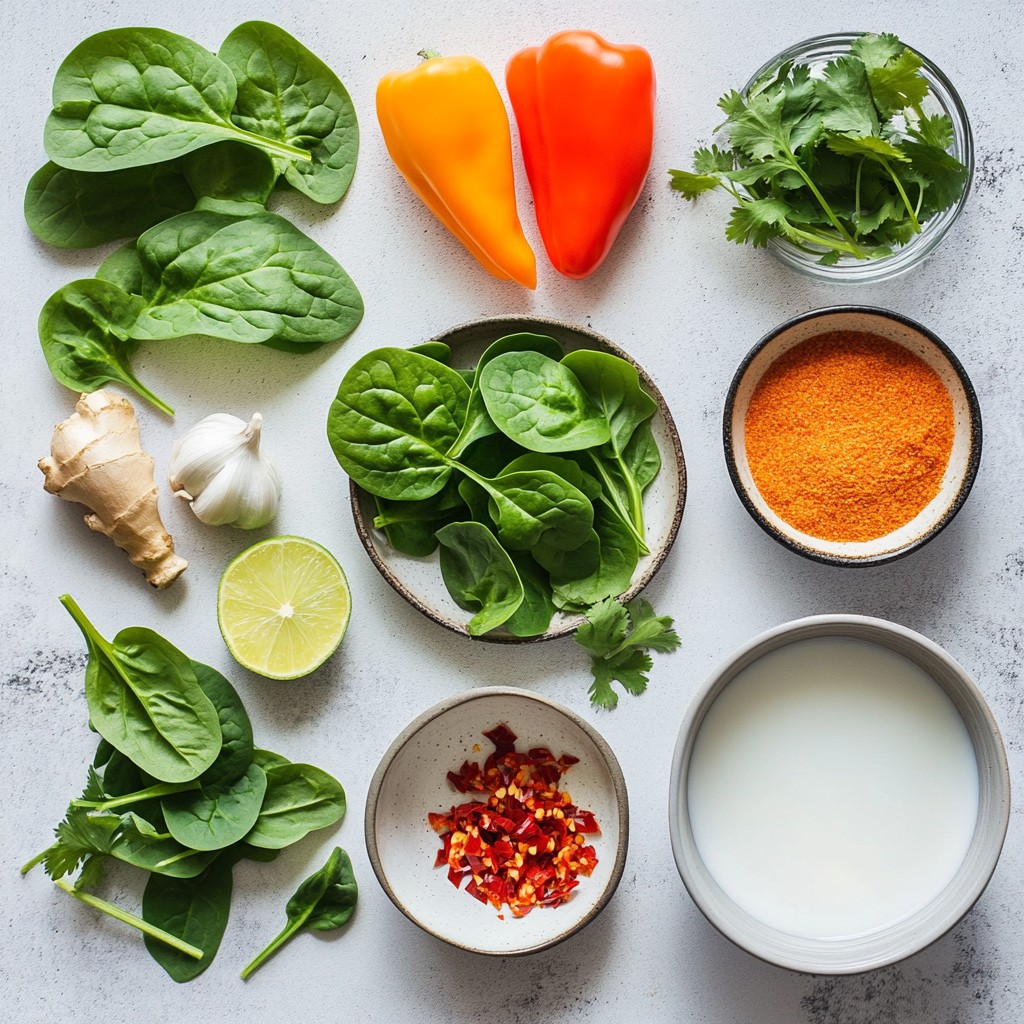
I love using these fresh ingredients. The ramen noodles serve as a great base. Coconut oil adds a rich, tropical flavor. Diced onion gives a sweet note. Minced garlic and grated ginger bring warmth and depth.
The red curry paste packs a punch, while coconut milk adds creaminess. Vegetable broth makes a lovely, savory base. Soy sauce adds umami, and lime juice brightens the dish.
Sliced green bell pepper adds crunch and color. Baby spinach wilts nicely, providing nutrients. For garnishes, fresh cilantro and green onions brighten the bowl. Chili flakes give a spicy kick if you like heat.
With these ingredients, you can craft a comforting bowl of coconut curry ramen. Each one plays a key role in creating a balanced, flavorful dish. Enjoy the cooking process, and get ready for a delicious meal!
Step-by-Step Instructions
Cooking Ramen Noodles
- Bring water to a boil in a pot.
- Cook the ramen noodles according to package instructions.
- Drain and set aside.
Sautéing Aromatics
- Heat coconut oil in a large pot over medium heat.
- Sauté the diced onion for about 3-4 minutes until soft.
- Add minced garlic and grated ginger, cooking for 1-2 minutes more.
Adding Curry Flavor and Liquids
- Stir in the red curry paste and cook for about 1 minute.
- Combine with the coconut milk and vegetable broth, stirring well.
- Add soy sauce and lime juice to the mixture.
Incorporating Vegetables
- Add sliced green bell pepper to the pot.
- Cook until softened, about 5 minutes.
- Stir in the baby spinach and let it wilt for 2 minutes.
Mixing in Ramen
- Add the cooked ramen noodles to the pot.
- Stir delicately to prevent breakage.
- Warm through for 2-3 minutes until heated.
Serving the Dish
- Ladle the coconut curry ramen into bowls.
- Garnish with fresh cilantro, sliced green onions, and chili flakes if you like it spicy.
Tips & Tricks
Perfecting Coconut Curry Ramen
- Choosing the right noodle variety: I often use instant ramen for quick meals. Fresh ramen adds a nice texture. Explore rice noodles for a gluten-free option.
- Adjusting spice levels to personal preference: Start with a small amount of red curry paste. Taste the broth, then add more if you want it spicier. You can also add fresh chili or chili flakes for extra heat.
- Recommendations for fresh herbs and garnishes: Fresh cilantro brightens the dish. Green onions add crunch. Experiment with basil or mint for unique flavors.
Cooking Techniques
- Sautéing aromatics effectively: Heat the coconut oil before adding onion. Cook until soft, then add garlic and ginger. This builds a strong flavor base.
- Simmering for depth of flavor: After adding liquids, let the soup simmer gently. This melds all the flavors together nicely. Don’t rush this step.
- Preventing mushy vegetables: Add firmer vegetables like bell peppers first. Cook them until just tender. Add leafy greens like spinach last to keep their texture bright.
Pro Tips
- Use Fresh Ingredients: For the best flavor, use fresh vegetables and herbs. Fresh cilantro and green onions will enhance the overall taste of your ramen.
- Adjust Spice Levels: If you prefer a milder curry, start with half a teaspoon of red curry paste and adjust according to your taste. You can always add more later!
- Add Protein: For a heartier meal, consider adding tofu, chicken, or shrimp to the soup. Just cook the protein before adding the vegetables.
- Customize Your Broth: Feel free to experiment with the broth. You can use a mix of vegetable and chicken broth for a richer flavor.
Variations
Protein Additions
You can add protein to your coconut curry ramen for extra flavor and nutrition. Here are some options:
- Tofu: Use firm or extra-firm tofu. Cut it into cubes and pan-fry until golden. This gives a nice texture.
- Shrimp: Add shrimp for a seafood twist. Cook them until they are pink and tender. They add a great flavor.
- Chicken: If you like meat, add cooked chicken. Shredded or diced works well. It makes the dish hearty.
Plant-based proteins like tofu are great for vegetarians. They are high in protein and low in fat. Plus, they soak up all the curry flavor.
Different Vegetable Combinations
You can mix up the vegetables to keep the dish fresh and exciting. Here are some ideas:
- Seasonal Swaps: Use vegetables that are in season. This way, your ramen tastes great year-round.
- Substitutes: Instead of bell peppers, try zucchini or snap peas. These add crunch and color.
- Mushrooms or Carrots: Adding mushrooms gives a nice umami flavor. Carrots add a slight sweetness and crunch.
Feel free to experiment with what you have. The more colors you add, the better!
Gluten-Free and Vegan Options
If you need gluten-free or vegan options, it’s easy to adapt this recipe.
- Gluten-Free Ramen: Look for gluten-free ramen options made from rice or buckwheat. They are tasty and work well in the broth.
- Vegan Dish: Make sure to use vegetable broth and check your ingredients. Coconut milk is naturally vegan.
- Coconut Aminos: Swap soy sauce with coconut aminos. This adds a sweet and salty flavor. It's a great alternative for gluten-free diets.
With these variations, you can make coconut curry ramen your own. Enjoy the bowl of flavor, any way you like it!
Storage Info
Storing Leftovers
To store leftovers, cool the ramen first. Let it sit at room temperature for about 30 minutes. This helps prevent bacteria. Once cooled, put the ramen in an airtight container. This keeps it fresh and avoids any odors from your fridge.
Reheating Tips
You can reheat ramen in the microwave or on the stovetop. If using a microwave, heat in short bursts. Stir between each burst to make sure it warms evenly. For stovetop reheating, use a pot on low heat. Add a splash of broth or water to help keep the noodles from sticking. This keeps the noodles soft and tasty.
Freezing Coconut Curry Ramen
Freezing is a great way to save extra ramen. First, divide it into single portions. Use freezer-safe containers or bags. Make sure to remove as much air as possible. To thaw, place the ramen in the fridge overnight. Reheat it gently on the stovetop, adding a little broth for texture. Avoid reheating in the microwave after freezing, as it can make the noodles mushy.
FAQs
What is Coconut Curry Ramen?
Coconut curry ramen is a warm and tasty dish. It combines soft ramen noodles with a rich coconut curry broth. The broth has flavors from garlic, ginger, and red curry paste. You get creamy coconut milk and fresh veggies, like bell peppers and spinach. The dish is both comforting and full of zest.
Can I make Coconut Curry Ramen in advance?
Yes, you can make coconut curry ramen ahead of time. Start by cooking the broth and veggies. You can store these in the fridge for up to three days. When you're ready to eat, cook the ramen noodles fresh. This keeps the noodles from getting mushy. Mix everything together when serving.
How can I make Coconut Curry Ramen spicier?
To add heat, try these simple steps:
- Add more red curry paste.
- Toss in fresh chili peppers.
- Use chili flakes as a garnish.
These options let you control the spice level easily.
What are the best side dishes to serve with Coconut Curry Ramen?
Coconut curry ramen pairs well with light sides, such as:
- A simple salad with lime dressing.
- Steamed dumplings for a filling option.
- Crispy spring rolls for extra crunch.
These sides enhance the meal and add variety.
Is Coconut Curry Ramen healthy?
Coconut curry ramen has many healthy ingredients. It includes:
- Coconut milk, which offers healthy fats.
- Veggies like bell peppers and spinach, packed with vitamins.
- Ramen noodles provide carbohydrates for energy.
This dish can be a nourishing option with balanced flavors.
This blog post covered the delicious and easy steps to make Coconut Curry Ramen. You learned about the key ingredients, from ramen noodles to fresh veggies. I shared helpful tips to enhance flavor and texture. You can also try various protein options and make it gluten-free.
Coconut Curry Ramen is a fun dish to enjoy and share. It's perfect for warming up. Whether you choose to tweak it or stick to the recipe, I hope you enjoy making this tasty meal!