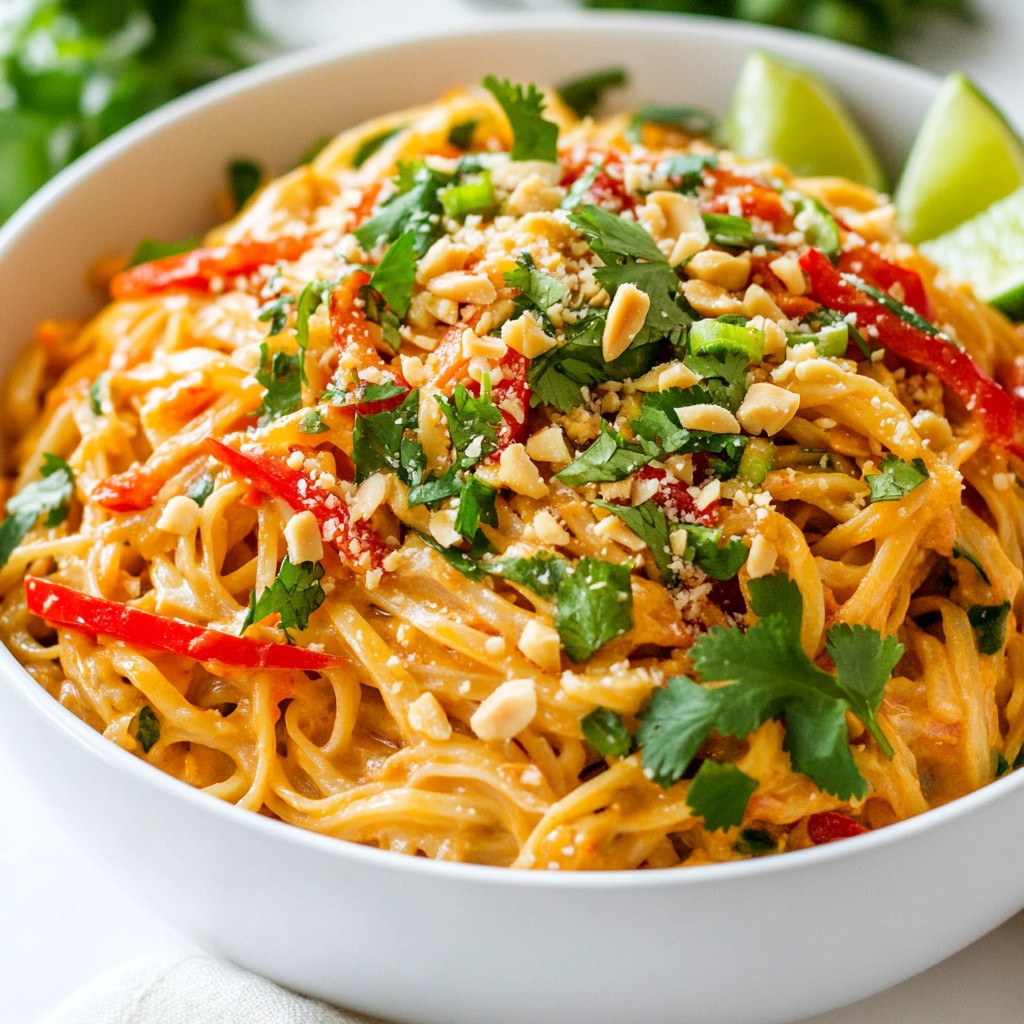
Are you ready to dive into a dish that’s packed with flavor and super simple to make? Spicy Thai Peanut Noodles bring the heat and heartiness you crave. With rich peanut sauce and perfectly cooked noodles, this meal is sure to impress. Follow my easy guide for a tasty dinner that not only satisfies but also allows room for your creativity. Let’s get started on this flavorful adventure!
Why I Love This Recipe
- Bold Flavors: The combination of peanut butter, sriracha, and fresh ginger creates a deliciously spicy and nutty sauce that packs a punch.
- Quick and Easy: With a total preparation time of just 30 minutes, this recipe is perfect for busy weeknights when you crave something tasty.
- Customizable: Feel free to add your favorite vegetables or protein to the noodles, making it a versatile dish for any preference.
- Colorful Presentation: The vibrant colors of the red bell pepper, green onions, and cilantro make this dish not only delicious but also visually appealing.
Ingredients
Detailed Ingredient List
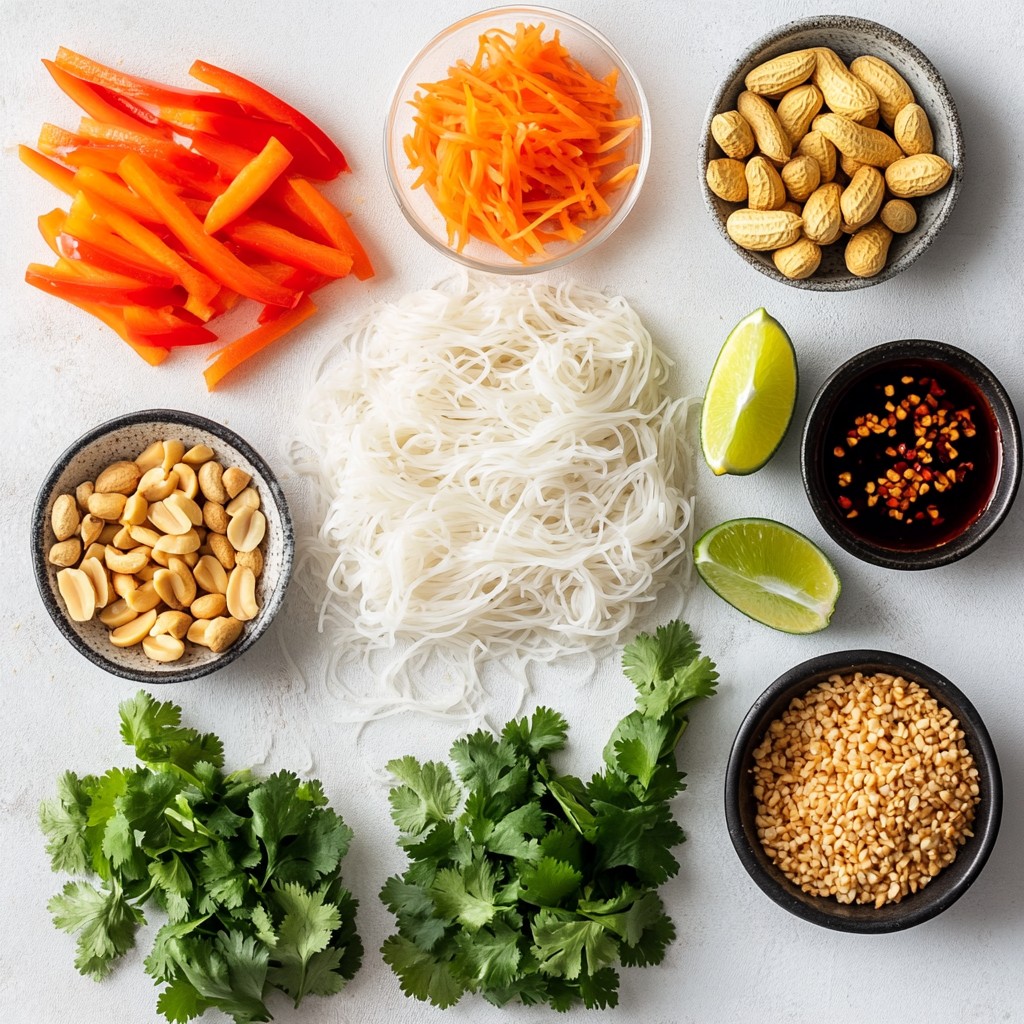
To make Spicy Thai Peanut Noodles, you will need the following ingredients:
- 8 oz rice noodles
- 1/4 cup creamy peanut butter
- 2 tablespoons soy sauce
- 1 tablespoon sesame oil
- 1 tablespoon sriracha (or more, to taste)
- 1 tablespoon freshly grated ginger
- 2 cloves garlic, minced
- 1 red bell pepper, sliced into thin strips
- 1 cup shredded carrots
- 3 green onions, chopped
- 1/4 cup chopped cilantro
- Chopped peanuts and lime wedges for garnish
Key Ingredients for Flavor
The star of this dish is definitely the peanut butter. It gives the sauce its rich and creamy texture. Soy sauce adds saltiness, while sesame oil brings a nutty aroma. Sriracha adds heat, and ginger and garlic give a fresh kick. The fresh veggies like bell pepper and carrots add crunch and color. They make each bite a delight.
Substitutions and Alternatives
You can swap rice noodles for whole wheat or even zucchini noodles. If you don’t like peanut butter, try almond or sunflower seed butter. For a gluten-free option, use tamari instead of soy sauce. You can also replace sriracha with chili paste. Just adjust to your taste. If you want more veggies, add broccoli or snap peas. These changes let you make this dish your own!
Step-by-Step Instructions
Cooking the Rice Noodles
First, cook the rice noodles. Boil water in a large pot. Add the noodles and cook them according to the package directions. This usually takes about 4 to 6 minutes. Once they are soft, drain the noodles well. Rinse them with cold water to stop the cooking. Set them aside for later.
Making the Peanut Sauce
Next, it’s time to make the peanut sauce. Grab a medium mixing bowl. Add 1/4 cup of creamy peanut butter. Then mix in 2 tablespoons of soy sauce. This adds a nice saltiness. Now, add 1 tablespoon of sesame oil for richness. For heat, mix in 1 tablespoon of sriracha. You can add more if you like it spicier. Don’t forget 1 tablespoon of freshly grated ginger and 2 cloves of minced garlic. Stir everything until the sauce is smooth and well mixed. This sauce is key to the dish's flavor.
Combining Ingredients in the Skillet
Now, let’s bring it all together in a skillet. Heat 1 teaspoon of sesame oil in a large skillet over medium heat. Add the sliced red bell pepper and shredded carrots. Cook them for about 3 to 4 minutes, until they are just tender. Next, toss in the cooked rice noodles. Pour the peanut sauce over the noodles. Gently stir everything together until the noodles are fully coated. Finally, add 3 chopped green onions and 1/4 cup of chopped cilantro. Toss just before serving. This adds freshness and color to the dish. Serve the noodles in bowls and top with chopped peanuts and lime wedges for an extra flavor kick.
Tips & Tricks
Perfecting the Texture of Noodles
To get the best texture for your noodles, cook them just right. Follow the package instructions closely. Avoid overcooking; you want them al dente. Rinse cooked noodles with cold water. This stops the cooking process and keeps them firm. Toss noodles with a drop of sesame oil after draining. This will prevent them from sticking together.
Adjusting Spiciness Levels
Spiciness can make or break this dish. Start with one tablespoon of sriracha. After mixing, taste the noodles. If you want more heat, add more sriracha. You can also adjust the spice by using milder chili sauces. For a kick without heat, add more garlic or ginger. These add flavor without too much spice.
Serving and Presentation Tips
How you serve your dish matters. Use large, colorful bowls for a nice look. Garnish with extra cilantro and lime wedges. This adds bright colors and fresh flavors. Chopped peanuts on top give a nice crunch. A squeeze of lime right before eating brightens every bite. Enjoy your beautiful and tasty creation!
Pro Tips
- Adjust the Spice Level: If you prefer a milder dish, reduce the amount of sriracha or omit it entirely. You can always add more to individual servings for those who enjoy the heat.
- Fresh Ingredients Matter: Using fresh ginger and garlic will enhance the flavor profile of the sauce. Avoid jarred options for the best taste.
- Perfect Noodle Texture: To prevent the rice noodles from becoming mushy, ensure you don’t overcook them. Drain and rinse them with cold water to stop the cooking process.
- Garnishing for Flavor: Don't skip the lime wedges and chopped peanuts. They add a burst of flavor and crunch that elevates the dish significantly.
Variations
Adding Proteins (Chicken, Tofu, Shrimp)
You can add protein to make this dish heartier. Chicken works well. Use cooked chicken breast, sliced thin. Tofu is a great vegan option. Use firm tofu, cubed and sautéed until golden. Shrimp also adds a nice touch. Cooked shrimp can be tossed in just before serving. Each protein adds flavor and texture.
Vegetables for Extra Crunch
Adding vegetables can make your noodles more colorful and exciting. Try snap peas or broccoli florets for a crisp bite. You can also add bell peppers and carrots, which give a nice crunch. Consider zucchini or bean sprouts for a fresh taste. The more veggies, the better the dish!
Vegan and Gluten-Free Options
To make this dish vegan, simply use tofu instead of chicken or shrimp. For gluten-free, choose rice noodles and gluten-free soy sauce. Check labels to ensure all sauces meet your needs. These swaps keep the dish full of flavor while meeting dietary needs. Enjoy the same great taste with these adjustments!
Storage Info
Storing Leftovers
After you enjoy your Spicy Thai Peanut Noodles, store leftovers in an airtight container. They will stay fresh in the fridge for up to three days. Make sure to let the noodles cool before sealing the container. This helps keep them from getting too soggy. If you have extra peanut sauce, store that separately for the best flavor.
Reheating Instructions
To reheat the noodles, place them in a skillet over medium heat. Add a bit of water or extra sesame oil to help them steam. Stir frequently until heated through, about five minutes. You can also use the microwave. Just heat in short bursts, stirring in between, until warm. If they seem dry, add a splash of water or sauce.
Freezing and Thawing Tips
You can freeze Spicy Thai Peanut Noodles, but the texture might change. To freeze, place cooled noodles in a freezer-safe bag. Squeeze out the air and seal tightly. They will last for about one month. When ready to eat, thaw them overnight in the fridge. Reheat them using the skillet method to get the best result.
FAQs
What can I use instead of peanut butter?
If you want a different flavor, try almond butter or sunflower seed butter. Both work well in this recipe. They give a nice creamy texture. You can also use tahini for a nut-free option. Each substitute offers a unique taste, so feel free to experiment.
Can I make this dish ahead of time?
Yes, you can make this dish ahead of time. Cook the noodles and prepare the sauce in advance. Just store them separately in the fridge. When you are ready to eat, combine them and heat gently. This keeps the noodles from getting mushy.
Is this recipe suitable for meal prep?
Absolutely! This recipe is great for meal prep. You can pack it in containers for lunch or dinner. Just keep some fresh veggies and herbs to add later. This keeps the dish fresh and colorful. Enjoy it throughout the week!
This blog post explored key ingredients, step-by-step cooking, and helpful tips for your dish. You learned about the best flavors, how to cook rice noodles, and make a tasty peanut sauce. We discussed variations, like adding proteins or veggies, and ways to store your leftovers.
Remember, cooking can adapt to your needs. Use this guide to create meals you love. Enjoy experimenting with flavors and textures as you make this recipe your own. Happy cooking!