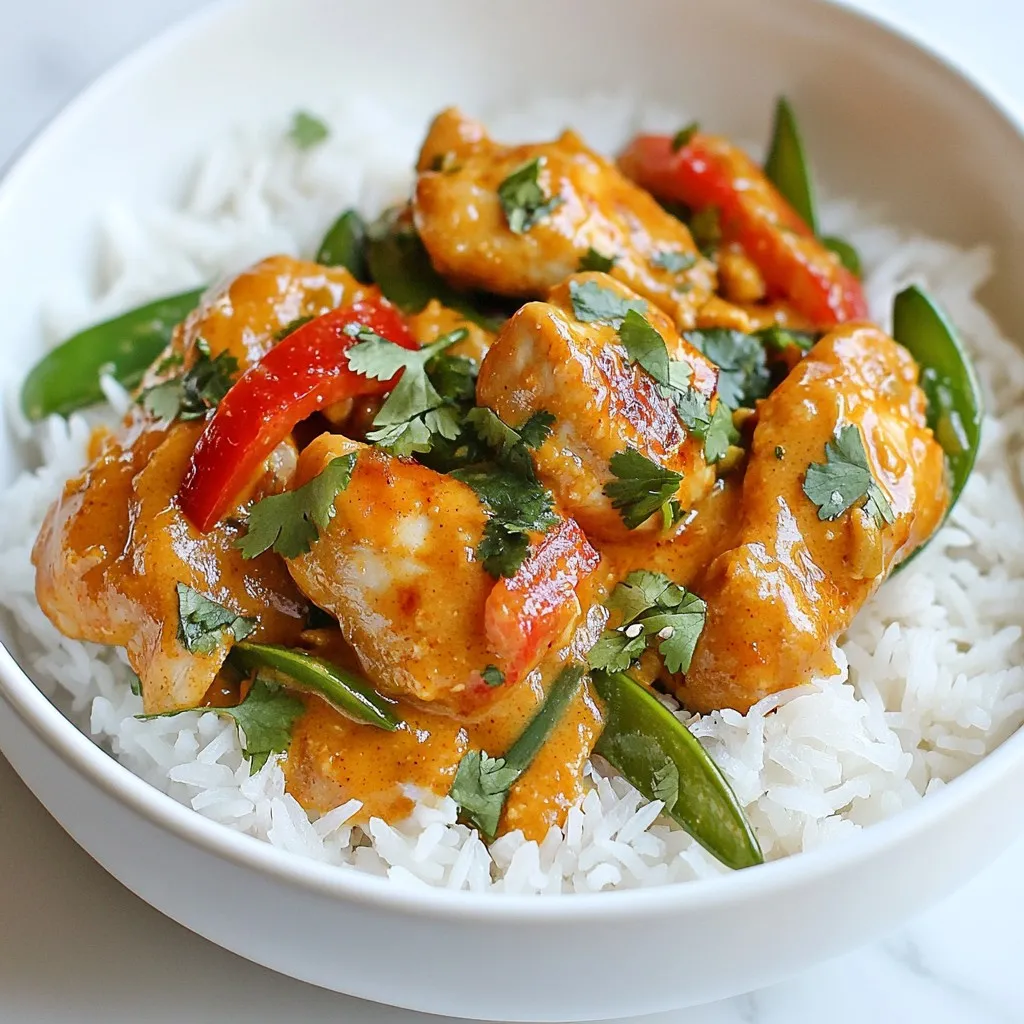
If you’re craving a meal that’s as rich in flavor as it is easy to make, you’ve come to the right place. Thai Coconut Peanut Chicken combines tender chicken thighs, creamy coconut milk, and nutty peanut butter for a dish that’s sure to wow your taste buds. I’ll guide you step by step to create this vibrant dish, loaded with fresh vegetables and zesty notes. Let’s dive into this simple yet delightful recipe!
Why I Love This Recipe
- Rich and Creamy Flavor: The combination of coconut milk and peanut butter creates a luxurious sauce that is both rich and flavorful.
- Quick and Easy: This dish comes together in just 30 minutes, making it perfect for a weeknight dinner.
- Colorful and Nutritious: The addition of vibrant vegetables like red bell peppers and snow peas adds color, crunch, and essential nutrients.
- Customizable: You can easily adjust the spice level or switch up the veggies based on your preferences!
Ingredients
Main Ingredients
– 1 lb boneless, skinless chicken thighs, cut into bite-sized pieces
– 1 cup coconut milk
– 1/2 cup creamy peanut butter
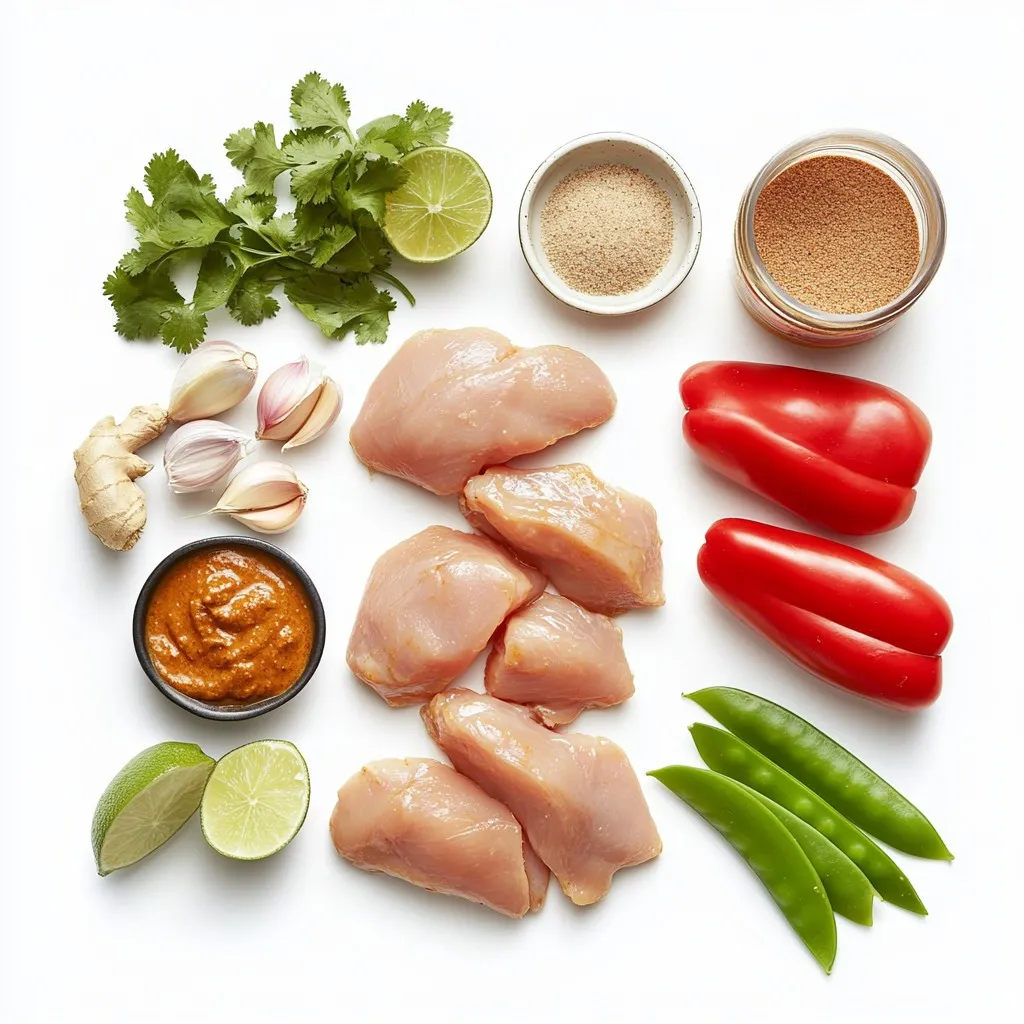
The main ingredients bring the dish to life. Chicken thighs are juicy and tender. They soak up all the flavors. Coconut milk adds creaminess and richness. It makes the dish smooth and sweet. Peanut butter gives it a nutty taste. It blends perfectly with coconut milk.
Additional Ingredients
– 2 tablespoons red curry paste
– 2 tablespoons soy sauce
– 1 tablespoon brown sugar
– 1 tablespoon lime juice
– 3 cloves garlic, minced
– 1-inch piece fresh ginger, grated
These ingredients add depth and spice. Red curry paste gives it that classic Thai flavor. Soy sauce adds saltiness, enhancing all the tastes. Brown sugar balances the heat with sweetness. Lime juice adds brightness and freshness. Garlic and ginger bring warmth and a lovely aroma.
Vegetables and Garnish
– 1/2 cup red bell pepper, sliced
– 1/2 cup snow peas
– 1/4 cup chopped fresh cilantro (for garnish)
Fresh veggies make the dish colorful and crunchy. Red bell pepper adds sweetness and a pop of color. Snow peas provide a crisp texture. They stay bright green and vibrant. Fresh cilantro on top adds a burst of flavor. It also makes the dish look beautiful.
Step-by-Step Instructions
Preparation of the Sauce
Start by making the sauce. In a large bowl, mix 1 cup of coconut milk with 1/2 cup of creamy peanut butter. Whisk them until smooth. Then, add 2 tablespoons of red curry paste, 2 tablespoons of soy sauce, 1 tablespoon of brown sugar, 1 tablespoon of lime juice, and 3 minced garlic cloves. Grate 1-inch of fresh ginger and add it too. This will create a rich and flavorful sauce.
Cooking the Chicken
Next, heat a bit of oil in a large skillet or wok over medium-high heat. Add 1 pound of bite-sized chicken thighs to the pan. Sauté the chicken for about 5 to 7 minutes. Make sure to turn the pieces often. This helps the chicken cook evenly and get a nice brown color.
Combining Ingredients
Once the chicken is cooked, pour the coconut-peanut sauce over it. Stir well to coat the chicken evenly. Now, slice 1/2 cup of red bell pepper and 1/2 cup of snow peas. Add these vegetables to the skillet. Cook for another 3 to 4 minutes. You want the veggies to be tender but still crisp. Serve the dish over fluffy jasmine rice and sprinkle fresh cilantro on top. Enjoy this tasty meal!
Tips & Tricks
Perfecting the Sauce
How do you adjust flavors with lime and soy sauce?
You can add lime juice for brightness. It lifts the dish’s flavor. Soy sauce adds saltiness and umami. Start with a little and taste as you go. You can always add more!
To get a smooth sauce consistency, whisk the coconut milk and peanut butter well. Mix until creamy. Using room temperature ingredients helps. If the sauce is too thick, add a splash of water or coconut milk.
Cooking Techniques
What are the best methods for sautéing chicken?
Use a large skillet or wok for even cooking. Heat a little oil over medium-high heat. Add the chicken in one layer. This helps it brown nicely. Stir occasionally for even cooking.
Which cookware is best for optimal results?
A non-stick skillet works great. It prevents sticking and makes cleanup easy. Cast iron is also good for heat retention. Choose what you feel comfortable using.
Serving Suggestions
How do you pair this dish with jasmine rice?
Serve the Thai Coconut Peanut Chicken over fluffy jasmine rice. The rice soaks up the sauce well. This makes each bite flavorful and satisfying.
What garnishes enhance the dish?
Chopped fresh cilantro adds color and flavor. You can also sprinkle crushed peanuts for crunch. Lime wedges are great too, for a zesty kick. These small touches make a big difference!
Pro Tips
- Choose the Right Chicken: Using boneless, skinless chicken thighs ensures the dish stays juicy and tender, absorbing the flavors of the sauce beautifully.
- Adjust the Spice Level: If you prefer a milder dish, reduce the amount of red curry paste or add it gradually until you reach your desired heat.
- Fresh Ingredients Matter: Use fresh ginger and garlic for the best flavor. They add a vibrant kick that complements the richness of the peanut sauce.
- Add More Veggies: Feel free to include other vegetables like broccoli or carrots for added nutrition and color; just ensure they are cut to a similar size for even cooking.
Variations
Dietary Adaptations
Making it gluten-free
To make this dish gluten-free, swap soy sauce for tamari. Tamari has a similar taste but does not contain gluten. You can also check the red curry paste for gluten. Most brands are safe, but always read the label.
Vegetarian or vegan alternatives
For a vegetarian version, use tofu instead of chicken. You can press and cube firm tofu, then sauté until golden. For a vegan option, use coconut milk and peanut butter just like the original recipe. Replace honey or brown sugar with maple syrup for sweetness.
Flavor Variations
Adding different vegetables
Feel free to mix in your favorite veggies. Broccoli, carrots, or baby corn work well. Just cut them into bite-sized pieces. Add them when cooking the chicken to keep them tender. You can also use frozen veggies for a quick meal.
Experimenting with spice levels
If you like heat, add fresh chilies or red pepper flakes. Start with a small amount and add more as needed. For milder flavors, reduce the red curry paste. Taste as you go to find your perfect balance.
Serving Style
Creative ways to serve the dish
Serve this dish in bowls over jasmine rice. You can also use rice noodles for a different twist. For a fun presentation, use lettuce leaves as wraps for the chicken. This makes for a tasty finger food option.
Ideas for side dishes
Pair with a simple cucumber salad for a refreshing crunch. You can also serve it with steamed jasmine rice or coconut rice for extra flavor. Fresh spring rolls make a great side too, adding a light and fresh touch to your meal.
Storage Info
Refrigeration
After you enjoy your Thai Coconut Peanut Chicken, store leftovers right away. Use an airtight container to keep it fresh. Your dish will stay good in the fridge for about 3 to 4 days. If you notice any strange smells or colors, it’s best to toss it.
Freezing Guidelines
To freeze your Thai Coconut Peanut Chicken, let it cool first. Then, place it in a freezer-safe container. Make sure it’s sealed well to avoid freezer burn. This dish can last up to 2 months in the freezer. When you’re ready to eat, thaw it overnight in the fridge. Reheat on the stove over low heat until warm.
Tips for Maintaining Quality
For best results, store your chicken without the rice. This keeps the rice from getting mushy. Always label your containers with dates. Look for signs of spoilage, like off smells or weird textures. If something seems off, don’t eat it. Enjoy your meals safely!
FAQs
What can I substitute for peanut butter?
If you have a peanut allergy, you can use sunbutter. This is made from sunflower seeds. It has a similar texture and taste. Almond butter is also a great choice. It adds a nice nutty flavor. Cashew butter works too, but it is sweeter.
Can I use chicken breasts instead of thighs?
Yes, you can use chicken breasts. They are leaner than thighs. This means they may taste less rich. The texture will also be different. Chicken breasts can dry out if overcooked. Reduce the cooking time by a few minutes. Check for doneness at about 5 to 6 minutes.
How spicy is Thai Coconut Peanut Chicken?
This dish is mildly spicy. The red curry paste gives it warmth. You can adjust the spice level based on your taste. To make it less spicy, use less curry paste. For more heat, add some chili flakes or fresh peppers.
This article explored making Thai Coconut Peanut Chicken. You learned about main ingredients like chicken thighs, coconut milk, and peanut butter. We covered step-by-step instructions for preparing the sauce and cooking the chicken. Tips for perfecting the dish, along with variations, were shared. Finally, we discussed storage methods for leftovers. Enjoy creating this tasty meal, and don’t hesitate to experiment with flavors. Your kitchen can be a fun place for new idea