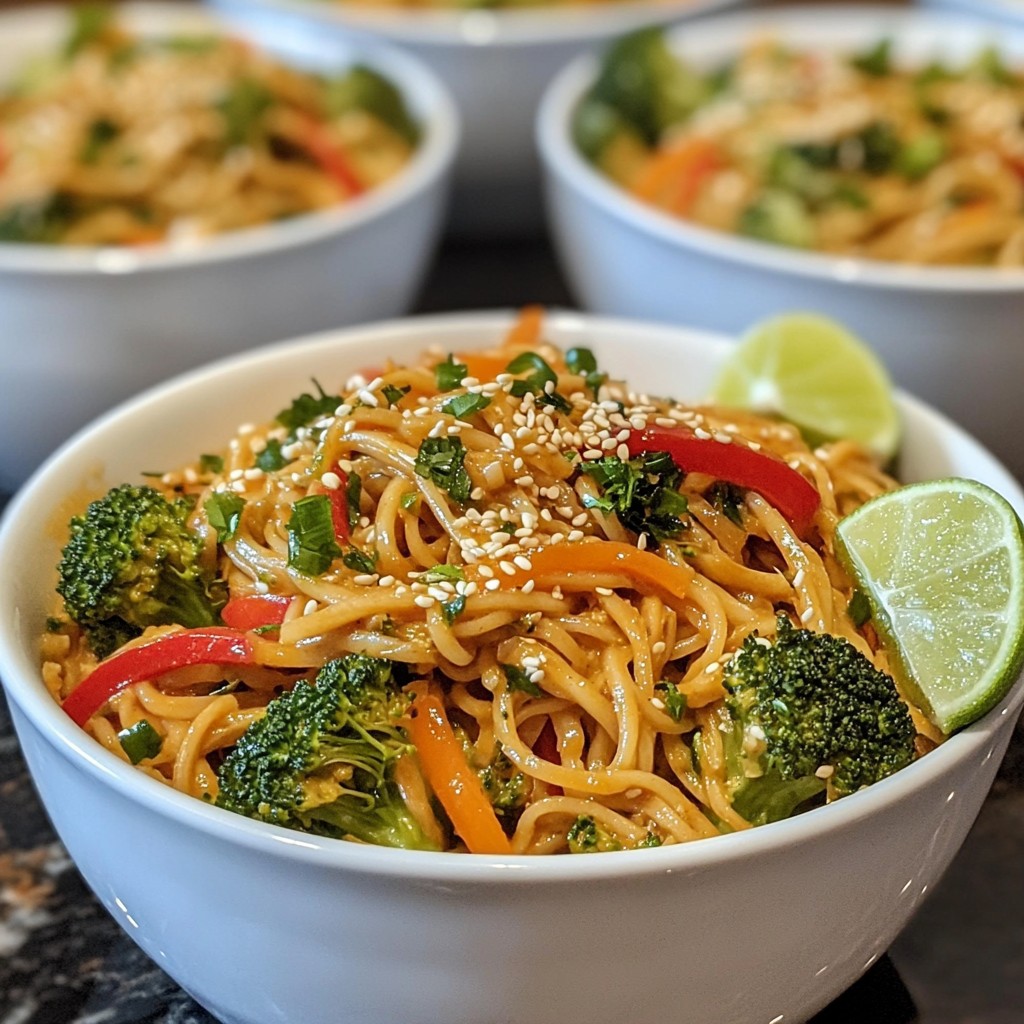
Craving a quick, tasty meal tonight? Try my Vegan Sesame Peanut Noodles! This easy recipe combines rice noodles with a rich peanut sauce and fresh veggies. Perfect for a busy weeknight or a friendly gathering, it's customizable for any diet. In this post, I’ll guide you through each simple step, share ingredient swaps, and offer tips for an amazing dish. Let's dive in and make a bowl of deliciousness!
Why I Love This Recipe
- Quick and Easy: This recipe takes only 20 minutes from start to finish, making it perfect for busy weeknights.
- Flavorful Sauce: The combination of peanut butter, soy sauce, and sesame oil creates a rich, creamy sauce that's bursting with flavor.
- Healthy Veggies: Packed with colorful vegetables like broccoli, bell peppers, and carrots, this dish is not only delicious but also nutritious.
- Customizable: You can easily add your favorite protein or adjust the veggies based on what you have on hand.
Ingredients
Complete List of Ingredients
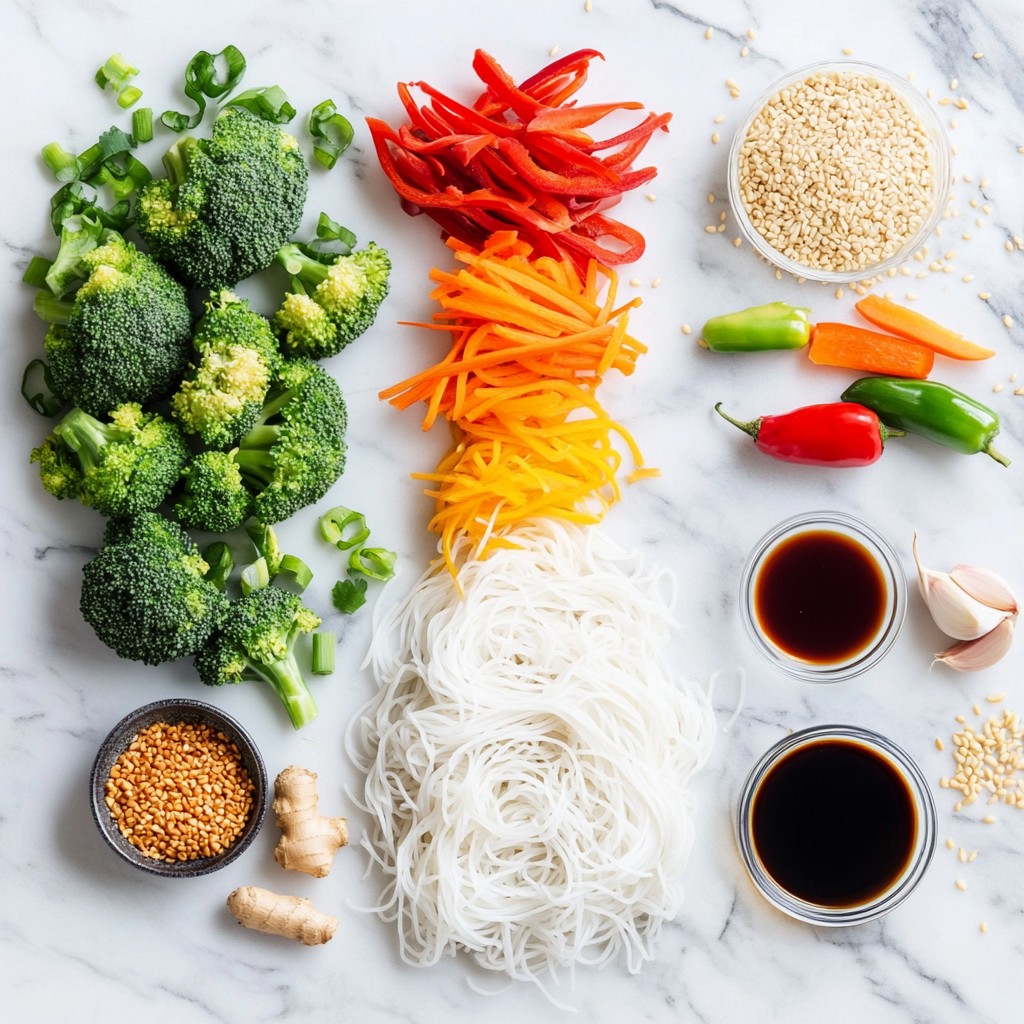
To make Vegan Sesame Peanut Noodles, you will need the following items:
- 8 oz rice noodles
- 1/4 cup peanut butter (smooth)
- 3 tablespoons soy sauce (or tamari for gluten-free)
- 2 tablespoons sesame oil
- 1 tablespoon maple syrup
- 2 tablespoons rice vinegar
- 1 tablespoon fresh ginger, grated
- 2 cloves garlic, minced
- 1 cup broccoli florets
- 1 red bell pepper, julienned
- 1 cup shredded carrots
- 1/4 cup chopped scallions (green onions)
- 1 tablespoon sesame seeds (toasted)
- Crushed red pepper flakes (optional, for heat)
Substitutions for Dietary Restrictions
You can easily adjust this recipe for different diets:
- Peanut Butter: Use almond butter or sunflower seed butter if allergic to peanuts.
- Soy Sauce: Swap for coconut aminos to avoid soy.
- Rice Noodles: Use gluten-free pasta or zucchini noodles for a low-carb option.
- Vegetables: Feel free to replace broccoli with snap peas or green beans.
- Sweetener: Maple syrup can be replaced with agave syrup or date syrup.
Nutritional Information Overview
This dish is not only tasty but also packed with nutrients. Here’s a brief look at its benefits:
- Calories: About 350 per serving.
- Protein: Contains around 12 grams per serving from peanut butter and noodles.
- Fiber: Offers around 5 grams, mainly from veggies and noodles.
- Healthy Fats: Rich in healthy fats due to peanut butter and sesame oil.
- Vitamins and Minerals: Provides vitamins A and C, and minerals like potassium from vegetables.
This dish is a great choice for a quick meal that is both delicious and nutritious.
Step-by-Step Instructions
Preparing the Rice Noodles
To start, boil water in a large pot. Once boiling, add 8 oz of rice noodles. Cook them as the package says. This usually takes about 4 to 6 minutes. When the noodles are soft, drain them in a colander. Rinse with cold water to stop the cooking. This keeps them from getting mushy. Set the noodles aside for later.
Making the Peanut Sauce
Grab a mixing bowl and add 1/4 cup of smooth peanut butter. Then, pour in 3 tablespoons of soy sauce. If you need it gluten-free, use tamari instead. Next, add 2 tablespoons of sesame oil, 1 tablespoon of maple syrup, and 2 tablespoons of rice vinegar. Don’t forget the flavor! Add 1 tablespoon of grated ginger and 2 cloves of minced garlic. Whisk everything together until it’s smooth. This is your tasty peanut sauce.
Stir-Frying the Vegetables
Now, heat a large skillet or wok over medium heat. Add a splash of water or a bit of sesame oil. Toss in 1 cup of broccoli florets and cook for 2 to 3 minutes. You want them slightly tender but still bright green. Next, add 1 red bell pepper, cut into thin strips, and 1 cup of shredded carrots. Stir-fry these for another 2 minutes. The colors will be vibrant and fresh!
Combining Everything Together
Pour your peanut sauce over the cooked veggies in the skillet. Stir well to coat everything evenly. Let this cook for 1 to 2 minutes to heat through. Now, add the rice noodles to the skillet. Mix gently so the noodles get coated in the sauce. Keep stirring until everything is warm and mixed well.
Serving Suggestions
Turn off the heat and stir in 1/4 cup of chopped scallions. If you like a little heat, add a pinch of crushed red pepper flakes. Serve the noodles in bowls and top with toasted sesame seeds. For fun, you can add a lime wedge on the side for a zesty kick! Enjoy this quick and easy meal!
Tips & Tricks
Best Practices for Cooking Rice Noodles
To cook rice noodles perfectly, follow these steps:
- Start by boiling water in a large pot.
- Add the rice noodles and cook them for about 4-5 minutes.
- Stir occasionally to prevent sticking.
- Once soft, drain the noodles and rinse under cold water.
- This stops the cooking and keeps the noodles firm.
Using cold water also helps to keep the noodles from clumping together later on.
How to Enhance the Flavor of the Sauce
To make the peanut sauce really shine, try these ideas:
- Use fresh ingredients like ginger and garlic for a bright taste.
- Add a squeeze of lime juice for extra zing.
- If you like spice, mix in some crushed red pepper flakes.
- For a richer flavor, toast the sesame seeds before adding them.
These small tweaks can elevate your dish and make it more exciting!
Presentation Tips for an Appealing Dish
A great presentation makes your meal more inviting. Here’s how to do it:
- Serve the noodles in deep bowls for a cozy feel.
- Sprinkle toasted sesame seeds on top for a nice crunch.
- Add chopped scallions for a pop of color.
- Include a lime wedge on the side for a fresh touch.
Making your dish look good can make it taste even better!
Pro Tips
- Prep Your Ingredients: Having all your vegetables chopped and sauce mixed before you start cooking will make the process smoother and faster.
- Adjust the Heat: Feel free to customize the amount of crushed red pepper flakes according to your spice preference for a personalized kick.
- Storage Tips: Leftovers can be stored in the fridge for up to 3 days. Reheat gently in a pan with a splash of water to prevent sticking.
Variations
Protein Add-Ins
You can add protein to make this dish heartier. Tofu is a great choice. Use firm or extra-firm tofu for the best texture. Cut it into cubes and pan-fry until golden. Tempeh is another option. Slice it thin and sauté until crisp. Both options soak up the peanut sauce well.
Vegetable Substitutions
Feel free to mix up the veggies! Snap peas add a nice crunch. You can also use bell peppers in different colors. Yellow or orange bell peppers will brighten the dish. Zucchini or mushrooms work well too. Just cut them into thin pieces to cook evenly.
Spicy Version with Additional Heat
Want a spicy kick? Add crushed red pepper flakes to the sauce. Start with a pinch and taste. You can always add more! Sriracha or chili paste are also excellent choices. Just mix a spoonful into the sauce for a bold flavor. Adjust the heat to your liking!
Storage Info
How to Store Leftovers
To store leftover vegan sesame peanut noodles, place them in an airtight container. Make sure to cool the noodles to room temperature first. Refrigerate them for up to three days. This helps keep the flavors fresh and the texture nice.
Reheating Tips for Best Texture
When reheating, add a splash of water or a bit of sesame oil. This keeps the noodles from drying out. You can use a microwave or a skillet. If using a skillet, heat over medium until warm. Stir gently to combine.
Freezing for Future Meals
You can freeze the noodles too! Place them in a freezer-safe container. They can last up to three months in the freezer. When ready to eat, thaw overnight in the fridge. Reheat as mentioned above for the best taste.
FAQs
Can I make Vegan Sesame Peanut Noodles ahead of time?
Yes, you can make Vegan Sesame Peanut Noodles ahead of time. Just cook the noodles and make the sauce. Store them in separate containers in the fridge. When you’re ready to eat, reheat the noodles and sauce together. Add fresh veggies just before serving for the best taste.
What are the best sides to serve with this dish?
You can serve a variety of sides with these noodles. Here are some great options:
- Steamed edamame
- A fresh cucumber salad
- Roasted Brussels sprouts
- Crispy tofu bites
These sides balance the flavors and add more nutrition to your meal.
How can I make this recipe gluten-free?
To make Vegan Sesame Peanut Noodles gluten-free, use tamari instead of soy sauce. Make sure your rice noodles are certified gluten-free. Most rice noodles are naturally gluten-free, but check the label to be safe. With these swaps, you can enjoy this dish without gluten.
Can I use other types of noodles?
Absolutely! You can use different types of noodles. Here are some tasty options:
- Soba noodles (make sure they’re gluten-free)
- Udon noodles
- Whole wheat spaghetti
- Zucchini noodles for a low-carb option
Each type of noodle brings a new taste and texture to this dish.
This article covered a simple and tasty dish: Vegan Sesame Peanut Noodles. We looked at the main ingredients, step-by-step instructions, and ways to tweak the recipe for your needs. I shared tips for cooking, storing, and making the meal your own.
Remember, cooking should be fun and enjoyable. Don’t be afraid to try new things and make this dish your own! Enjoy your cooking adventure!